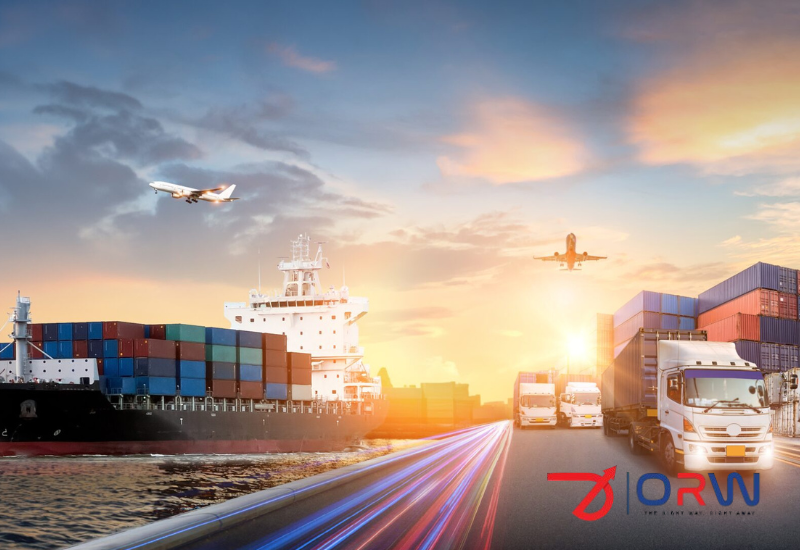
Picture a world where supply chains stop working overnight. Grocery shelves go empty. Production lines go quiet. Pharmacies run out of medicines. That’s not a hypothetical — it’s exactly what happens when we break down Supply Chain vs Logistics, even briefly.
Most businesses don’t think about this until something goes wrong. A delayed shipment, a stock-out at the wrong time, a consignment arriving damaged — and suddenly the gap between a well-run supply chain and a struggling one becomes very visible. Understanding how logistics and supply chain management actually work together is the first step toward building operations that don’t crack under pressure.
What is Logistics?
Logistics is the practical execution of moving goods from one point to another effectively and efficiently. It is the lifeblood of any company or organization because it ensures the flow of products and services within the system. Logistics does its work silently until something goes wrong.
Some of the major aspects involved in logistics include selecting an appropriate transport means and route, ensuring efficient storage facilities in the appropriate locations to facilitate speedy retrieval of the products, efficient management of the inventories, ensuring that orders are met, and making sure that there is last mile delivery.
For example, a move to position warehouses close to areas where delivery is necessary and establishment of dedicated delivery corridors could ensure that delivery is done 40% faster than otherwise would have been possible — a strategy commonly followed by leading transport services in India.
What is Supply Chain Management (SCM)?
While logistics handles the movement of goods, supply chain and logistics management together cover the entire journey — from raw material sourcing all the way to the end customer. If logistics is one instrument in the orchestra, supply chain management is the conductor.
SCM involves strategic sourcing (finding the right suppliers), production planning (aligning manufacturing with actual demand), integrated logistics coordination, demand forecasting using data, and managing customer relationships after delivery. It’s the bigger picture that logistics operates within.
A useful real-world case: when a pharmaceutical company faced vaccine distribution challenges, an integrated SCM solution combining cold storage, priority transportation, and real-time tracking reduced delivery windows from 72 hours to 24. That’s supply chain and logistics solutions working in combination — not separately.
Supply Chain vs Logistics (Key Differences)
This is where a lot of businesses get confused — and it’s worth being clear about.
| Aspect | Logistics | Supply Chain |
| Focus | Tactical movement of goods | Strategic oversight of the entire flow |
| Scope | Transportation and storage | End-to-end from suppliers to customers |
| Time Horizon | Short-term (daily operations) | Long-term (months and years) |
| Primary Goal | Cost-efficient delivery | Building competitive advantage |
| Key Metrics | On-time delivery, freight cost | Total system cost, customer satisfaction |
The simplest way to frame supply chain vs logistics: logistics makes sure products move well today. Supply chain management designs the system that moves products better tomorrow. Both matter — but they operate at different levels and require different thinking.
Role of Logistics in Supply Chain Management
Logistics is the engine inside the supply chain. Without it functioning well, the broader SCM strategy has nothing to run on. Factories stall when materials don’t arrive. Retailers lose sales when shelves go empty. Customers switch brands when deliveries are consistently late.
The numbers behind this are significant. Logistics typically accounts for 60 to 70% of total supply chain costs — which means even modest improvements in logistics efficiency have a meaningful impact on overall operational spend. Research also points to the fact that over 80% of buyers consider delivery speed a factor in their purchase decisions, which makes logistics performance a direct driver of revenue, not just a backend cost.
Beyond cost and speed, logistics also affects sustainability. Optimised routing alone can reduce carbon emissions by 25 to 40% — a consideration that is increasingly relevant to businesses with environmental commitments and enterprise buyers with supplier requirements around sustainability.
Key Benefits of Efficient Logistics & SCM
Businesses that invest in building strong supply chain & logistics services see consistent, measurable outcomes across the operation.
Lower operational costs: Route optimisation and better inventory management typically reduce overall costs by 25 to 30%, not through cuts but through eliminating waste in the system.
Higher on-time delivery rates: Reliable logistics infrastructure pushes on-time performance toward 98%, which builds customer trust and directly supports repeat business.
Faster market response: With the right supply chain & logistics services in place, businesses can respond to demand surges in hours rather than days — a genuine competitive advantage in fast-moving categories.
Fewer returns and damages: Accurate fulfilment and proper handling protocols reduce return rates significantly. One e-commerce operator saw returns drop by 28% after restructuring their last-mile delivery approach.
Resilience under disruption: A well-designed supply chain absorbs shocks — fuel price spikes, weather events, sudden demand shifts, without cascading failures.
How to Choose the Right Logistics Partner?
The right logistics and supply chain management partner isn’t the one with the biggest fleet or the most aggressive pricing — it’s the one whose operations actually match what your business needs, , including the ability to provide consistent and reliable door to door transport.
Coverage that fits your routes. National coverage claims mean little if the partner doesn’t have real infrastructure on the specific corridors you depend on. Verify branch presence, not just map coverage.
Technology that gives you visibility. Real-time tracking, digital documentation, and accessible reporting are baseline expectations now. A partner operating without these is a step behind where the industry needs to be.
Sector-specific experience. Cold chain requirements for pharma are different from just-in-time delivery for automotive, which is different again from last-mile retail distribution. Experience in your category means fewer mistakes and better-calibrated handling.
A transparent claims process. Losses and damages occur occasionally in any logistics operation. How quickly and fairly a partner resolves those situations is a better indicator of reliability than their sales pitch.
Scalability. Your volumes will change. The right partner can scale up for peak seasons and back down without charging you for capacity you’re not using.
Why Partner with Okara Roadways?
Choosing us means selecting:
- Proven Expertise: 3+ decades of solving India’s toughest logistics challenges
- Nationwide Reach: From Leh’s mountains to Kerala’s coast
- Transparent Operations: Real-time visibility into every shipment
- Customer Obsession: Dedicated managers for personalized support
“When our automotive plant faced a critical parts shortage, Okara executed a 1,200 km overnight delivery that saved ₹2.3 crore in production losses.”
— Operations Head, Premium Auto Manufacturer
Conclusion
Logistics and supply chain management aren’t separate departments — they’re two layers of the same operation. Logistics keeps things moving today. Supply chain management builds the system that moves things better tomorrow. Getting both right is what separates businesses that grow reliably from those that get stuck managing constant disruptions.
Okara Roadways has spent over three decades solving India’s toughest logistics challenges — from inter-state FTL freight to last-mile retail distribution — across routes spanning the length and breadth of the country. The combination of nationwide reach, real-time tracking, and industry-specific handling makes us a logistics and supply chain partner built for businesses that can’t afford to get it wrong.
Visit okararoadways.net to find out how we can support your supply chain and logistics requirements.