Supply chains succeed or fail based on one thing: movement. Products sitting in warehouses create no value. Products reaching customers on time create satisfied buyers, repeat orders, and profits.
Transportation is the supply chain’s circulatory system. Raw materials to factories. Finished goods to distribution centers. Products to retailers. Final delivery to customers. Every step requires movement.
Poor transportation destroys supply chain efficiency. Delays cascade. Inventory piles up. Stockouts happen. Costs spiral. Customers leave.
Smart transportation in supply chain operations makes the difference. Goods moving smoothly. Costs controlled. Delivery promises kept. That’s how businesses compete today.
What Are Transportation Services in Supply Chain?
Transportation services in supply chain are the systems, processes, and providers moving goods from origin to destination. Not just trucks on highways. Complete solutions handling pickup, transit, tracking, and delivery.
Think bigger than moving boxes. Transportation services coordinate timing. They manage documentation. They optimize routes. They track shipments. They solve problems when things go wrong.
Physical Movement – Trucks, trains, ships, planes carrying cargo. Different modes for different needs. Speed versus cost. Weight versus distance.
Information Flow – Tracking systems showing where goods are. Documentation proving ownership and compliance. Communication between parties. Data driving decisions.
Value-Added Services – Beyond basic transport. Packaging. Labeling. Quality checks. Storage. Order consolidation. Services that make transportation work seamlessly.
Modern logistics transportation services integrate all these elements. You get movement plus information plus coordination.
You also need to know-What Are Shipping Charges in India?
Role of Transportation in Supply Chain Management
Transportation connects every supply chain node. Remove it and supply chains collapse. Understand it and supply chains excel.
Connecting Supply and Demand – Manufacturers produce. Customers consume. Usually in different locations. Transportation bridges that gap. Without it, production and consumption can’t happen at scale.
Enabling Specialization – Factories don’t need to be near customers. Warehouses can centralize inventory. Transportation makes geographic separation work. This enables specialization and efficiency.
Timing Control – Just-in-time manufacturing depends on precise transportation. Seasonal products need timed delivery. Perishables require speed. Transportation timing determines whether products arrive when needed.
Cost Management – Transportation typically consumes 30-50% of logistics costs. For low-margin products, it can determine profitability. Efficient transportation in supply chain operations directly impacts bottom line.
Service Level Delivery – Customer promises depend on transportation reliability. E-commerce promises 2-day delivery. Retailers expect weekly restocking. Transportation must deliver consistently.
Inventory Optimization – Faster, reliable transportation means lower safety stock. Goods in transit replace goods in warehouses. Transportation speed directly affects inventory investment.
Competitive Advantage – Companies with superior transportation capabilities serve customers better while controlling costs. That combination wins market share.
The Importance of AI in Logistics: Transforming Modern Supply Chains
Types of Logistics Transportation Services
Different businesses need different transportation solutions.
Full Truckload (FTL) – Entire truck for one shipment. One pickup. One delivery. Fastest option for large shipments. Premium pricing but worth it for time-sensitive cargo.
Part Truckload (PTL) – Share truck space with other shippers. Middle ground between FTL and LTL. Good for shipments too big for LTL but not filling full trucks.
Less Than Truckload (LTL) – Small shipments consolidated with others. Multiple pickups and deliveries. Cheaper per shipment. Longer transit times. Best for smaller, less urgent shipments.
Dedicated Transportation – Vehicles committed to one shipper. Predictable capacity. Priority service. Consistent quality. Higher cost but maximum control.
Multimodal Transportation – Combining modes strategically. Rail for long distance. Truck for first and last mile. Ship for international. Optimization balances speed, cost, and reliability.
Express Services – Speed priority. Premium pricing. Guaranteed delivery windows. For urgent shipments where cost matters less than time.
Cold Chain Transportation – Temperature-controlled throughout journey. For pharmaceuticals, food, chemicals. Requires specialized equipment and monitoring.
Reverse Logistics – Returns handling. Product recalls. Packaging recycling. Growing importance with e-commerce. Critical for customer satisfaction.
Each type serves specific needs. Smart businesses match transportation types to shipment characteristics.
Importance of Choosing the Right Logistics Company for Transportation
Not all transportation providers are equal. Choosing wrong costs money, time, and customers.
Network Coverage – Can they reach your destinations? National coverage matters for distributed operations. Okara Roadways covers all 36 states and union territories in India. That nationwide reach matters.
Reliability – Do deliveries happen on time? Consistently? Missed deliveries cascade through supply chains. Unreliable transportation forces higher inventory, buffer stock, safety margins. All expensive.
Technology Integration – Real-time tracking. Automated documentation. System integration with your ERP. Digital proof of delivery. Modern logistics transportation services provide visibility.
Fleet Size and Quality – Adequate capacity during peak seasons. Well-maintained vehicles reducing breakdowns. A logistics company for transportation with 75,000+ vehicles like Okara Roadways has capacity to handle volume.
Service Flexibility – Can they adapt to your needs? Rush shipments. Schedule changes. Special handling. Growing businesses need partners who flex.
Financial Stability – Transportation providers go bankrupt. Your goods are in their custody. Their financial problems become your problems. Established companies offer security.
Insurance and Liability – Goods get damaged. Accidents happen. Proper insurance protects you. Clear liability terms prevent disputes.
Customer Service – Problems need quick resolution. Responsive service prevents small issues becoming big problems.
Sustainability Credentials – Increasingly important. Fuel efficiency. Emission standards. Route optimization. Future regulations will require green logistics.
Choosing the right logistics company for transportation is a strategic decision. Not just comparing rates. Evaluating capabilities, reliability, and partnership potential.
Real Examples of Transportation in Supply Chains
Abstract concepts make sense through concrete examples.
E-commerce Fulfillment – Customer orders online. Warehouse picks and packs. Regional hub sorts. Last-mile delivery to doorstep. Multiple transportation legs. Coordination critical. Companies like Okara Roadways handle the distribution network connecting warehouses to delivery points nationwide.
Automotive Manufacturing – Thousands of parts from hundreds of suppliers. Just-in-time assembly. Parts must arrive exact sequence, exact time. One delay stops production. Transportation synchronization makes or breaks automotive supply chains.
FMCG Distribution – Products from factories to distributors to retailers. High-volume, low-margin. Transportation costs directly impact profitability. Consolidation reduces costs. Route optimization saves fuel.
Pharmaceutical Supply Chain – Temperature control mandatory. Documentation intensive. Regulatory compliance strict. Cold chain integrity determines product viability. Specialized logistics transportation services handle these demanding requirements.
Retail Replenishment – Stores need continuous restocking. Seasonal surges require flexibility. Multiple pickup points consolidating to distribution centers then distributing to stores. Transportation synchronizes supply and demand.
Export-Import Operations – Factory to port. Ocean freight. Port to distribution center. Customs clearance. Multimodal coordination. International goods transport services manage this complexity daily.
Each example shows transportation isn’t just moving boxes. It’s coordinating complex systems where timing, information, and physical movement must synchronize perfectly.
What is OTIF in Supply Chain and Its Benefits: Complete Guide
Conclusion
Transportation services are the supply chain’s lifeline. Without efficient movement, even perfect manufacturing and accurate forecasting fail. Products don’t reach customers. Value doesn’t materialize.
Supply chain transportation determines competitive position. Companies with superior transportation serve customers better while controlling costs. That combination wins markets. Poor transportation loses markets regardless of product quality.
The role of transportation in supply chain management is growing. Customer expectations increase. Delivery windows shrink. E-commerce explodes. These trends make transportation more critical, not less.
Choosing the right logistics company for transportation matters enormously. Network coverage. Reliability. Technology. Capacity. Service. These factors determine whether transportation strengthens or weakens your supply chain.
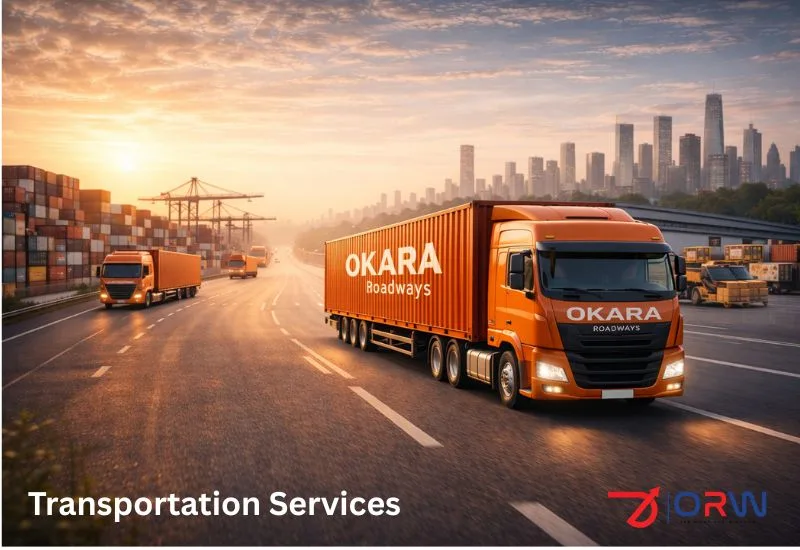
At Okara Roadways, we’ve built India’s largest transportation network precisely to solve supply chain challenges. Coverage across all 36 states and UTs. Fleet of 75,000+ vehicles. Fully digital operations. Real-time tracking. Contactless delivery.
Our logistics transportation services connect manufacturers, distributors, retailers, and end customers. We handle FTL, PTL, and specialized transportation needs. Our network makes delivery to tier-2 and tier-3 cities as reliable as metros.
Transportation in supply chain operations is too critical to leave to chance. Partner with providers who have capacity, coverage, technology, and track record.
Your supply chain moves at the speed of your transportation. Choose wisely.
Transportation services move goods from one place to another in the supply chain. They include pickup, transit, tracking, and delivery using trucks, trains, ships, or planes.
Transportation connects suppliers, manufacturers, warehouses, and customers. Efficient transport ensures goods arrive on time, reduces costs, and keeps the supply chain running smoothly.
Common types include Full Truckload (FTL), Part Truckload (PTL), Less Than Truckload (LTL), express delivery, cold chain transportation, and multimodal transport.
They reduce delivery time, improve tracking, lower logistics costs, and help businesses maintain better inventory levels while meeting customer delivery expectations.
Look for strong network coverage, reliable delivery records, modern tracking technology, sufficient fleet capacity, and responsive customer support. These factors ensure smoother supply chain operations.