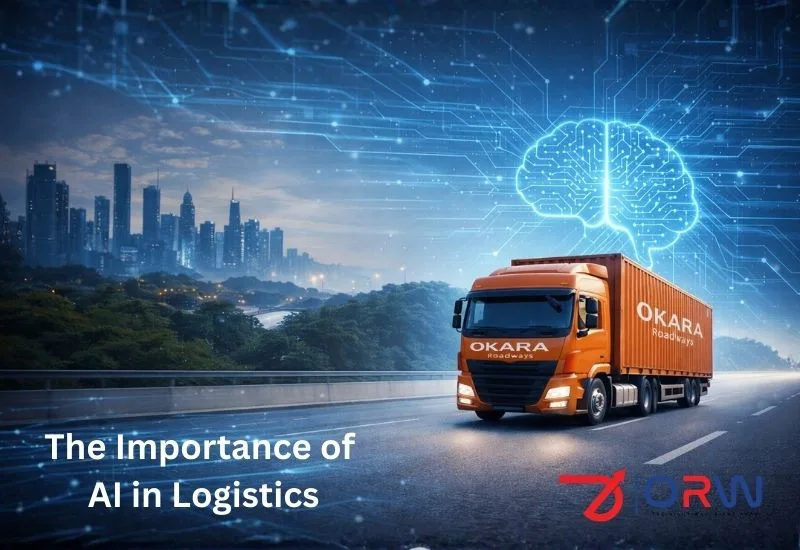
Your truck sits idle at a warehouse. Another route faces unexpected delays. Inventory runs short at one location while excess stock piles up elsewhere.These problems used to be “just how logistics works.” Not anymore.
AI in logistics changed everything about how goods move across India. Companies using AI in logistics and supply chain operations see dramatic improvements in delivery times, cost savings, and customer satisfaction.
For FTL logistics services and commercial goods transportation, AI transforms gut-feeling decisions into data-driven precision.
What is AI in Logistics?
AI in logistics uses artificial intelligence technologies like machine learning, predictive analytics, and automation to optimize supply chain operations. Instead of humans making every routing decision manually, AI systems analyze massive datasets finding patterns humans would miss.
Think about planning routes for 1,000 trucks simultaneously. Traditional methods relied on planners using experience and basic rules. AI in logistics and supply chain systems consider thousands of variables at once – traffic patterns, weather forecasts, vehicle capacity, driver hours, fuel costs, delivery windows, road conditions.
The AI calculates optimal routes in seconds that would take humans days to figure out. Machine learning powers much of this technology. These systems learn from historical data, getting smarter over time.
Key Roles of AI in Logistics Operations
AI in logistics handles several critical functions:
Predictive Analytics
AI systems analyze weather data, traffic patterns, vehicle maintenance records, and historical delivery data predicting potential delays. When delays are likely, systems proactively reroute shipments maintaining on-time performance.
Automated Decision Making
Which warehouse should fulfill an order? What route minimizes fuel costs while meeting delivery windows? AI answers these questions instantly with data-backed recommendations.
Demand Forecasting
Using historical patterns, seasonal trends, and economic indicators, AI predicts future shipping volumes. This helps logistics providers staff appropriately and position vehicles strategically.
Real-Time Optimization
Traffic jams appear? AI reroutes affected vehicles immediately. Urgent shipment needs pickup? The system finds the nearest available truck and adjusts other assignments.
Industry Impact: Companies implementing AI in supply chain and logistics report 15-25% cost reductions and 20-30% faster delivery times.
Top 10 Benefits AI Delivers to Logistics
AI in logistics offers concrete advantages changing how companies operate:
1. Cost Savings Up to 40% – AI optimizes routes cutting fuel consumption by 20-30%. Predictive maintenance prevents expensive breakdowns. Automated processes reduce labor costs. These savings compound significantly across large commercial goods transportation operations.
2. Faster FTL Logistics Services Deliveries – Route optimization considers real-time traffic, weather, and road conditions finding fastest paths. AI-powered scheduling reduces loading/unloading wait times. Better coordination between warehouses, trucks, and customers compresses overall delivery timelines by 15-25%.
3. Real-Time Visibility for Commercial Goods Transportation – GPS combined with AI provides complete shipment tracking. Customers see exactly where cargo is, estimated arrival times, and get automatic updates if anything changes. This transparency builds trust and reduces “where’s my shipment?” calls flooding customer service.
4. Accurate Demand Forecasting – Machine learning analyzes years of historical data, seasonal patterns, economic trends, and market signals predicting future demand with 90%+ accuracy. This helps FTL logistics services position capacity where it’s needed before demand spikes hit.
5. Reduced Downtime Through Predictive Maintenance – Sensors monitor vehicle health continuously. AI analyzes this data predicting when components will fail before breakdowns happen. Scheduled preventive maintenance prevents roadside breakdowns that delay deliveries and damage customer relationships.
6. Optimized Inventory in AI in Supply Chain and Logistics – AI determines optimal stock levels balancing availability against holding costs. Automated reordering prevents both stockouts and excess inventory tying up capital. For companies running warehouses alongside commercial goods transportation, this optimization significantly improves working capital efficiency.
7. Lower Emissions for Sustainability – Route optimization reduces unnecessary mileage cutting fuel consumption and emissions. Better load planning maximizes truck capacity reducing total vehicles needed. These environmental benefits matter increasingly as customers demand sustainable AI in logistics practices.
8. Scalable Operations During Peak Periods – Festival season, harvest time, year-end shopping – demand spikes challenge logistics capacity. AI in logistics and supply chain systems dynamically adjust to volume changes, automatically scaling resources up during peaks and down during slow periods without manual intervention.
9. Higher Customer Satisfaction – On-time deliveries, accurate ETAs, proactive delay notifications, and complete visibility create superior customer experiences. Okara Roadways’ 98% on-time rate driven by AI in logistics translates directly into customer loyalty and repeat business.
10. Risk Mitigation Through Early Alerts – AI monitors thousands of data points identifying potential disruptions early. Weather threatening routes, traffic building on key highways, vehicles showing maintenance issues, capacity constraints developing – early warnings enable proactive responses preventing customer-facing failures.
How Okara Roadways Integrates AI in Logistics?
At Okara Roadways, AI in logistics isn’t marketing talk – it’s embedded in daily operations across 75,000+ vehicles.
Real-Time Tracking
GPS combined with AI in logistics predicts accurate arrival times considering traffic ahead and historical performance. Automated notifications keep customers informed without constant manual checking.
Predictive Maintenance
Sensors monitor our 75,000+ vehicle fleet continuously. AI analyzes engine performance, brake conditions, tire wear, and transmission health. This identifies vehicles needing service before breakdowns occur – preventing failures that devastate on-time performance in commercial goods transportation.
Capacity Planning
Machine learning predicts shipping volumes weeks ahead. We position vehicles where demand will spike, ensuring adequate capacity. For seasonal businesses, this ensures we’re ready when peak periods hit.
Warehouse Automation
AI optimizes our 200+ facilities, determining storage locations, managing inventory levels, and coordinating loading schedules. These AI in supply chain and logistics technologies created our 98% on-time delivery record.
The Future is Already Here
AI in logistics represents the future, but that future exists now for companies ready to embrace it. The gap between AI-powered logistics providers and traditional operators widens daily. Companies relying on spreadsheets and manual planning can’t compete with AI efficiency.
For businesses shipping goods across India, choosing an AI in logistics powered partner means faster deliveries, lower costs, better visibility, and superior reliability. The logistics industry won’t return to manual planning. AI-driven operations are the new standard for FTL logistics services and commercial goods transportation.
Companies partnering with technology-forward providers gain competitive advantages through superior supply chain performance.
Ready to experience AI-powered logistics? Contact Okara Roadways today for FTL logistics services powered by advanced AI technology. Call +91-11-42355532 or visit okararoadways.net to optimize your supply chain performance.