Imagine this: You have shipped an order which contained thousands of rupees worth of product. Three days later, your customer calls claiming they never got it. You have no signature, no photo, no record. It’s just their word against yours. Who’s right? Who pays? This nightmare scenario happens more often than you’d think-research shows that 30% of delivery disputes occur simply because there’s no solid proof of delivery.
In today’s fast-moving logistics world, trust isn’t just nice to have; it is everything. Be it business with frequent product shipments or customers awaiting an important package, having knowledge that deliveries can be traced protects all parties. That is where proof of delivery becomes your safety net.
What is Proof of Delivery?
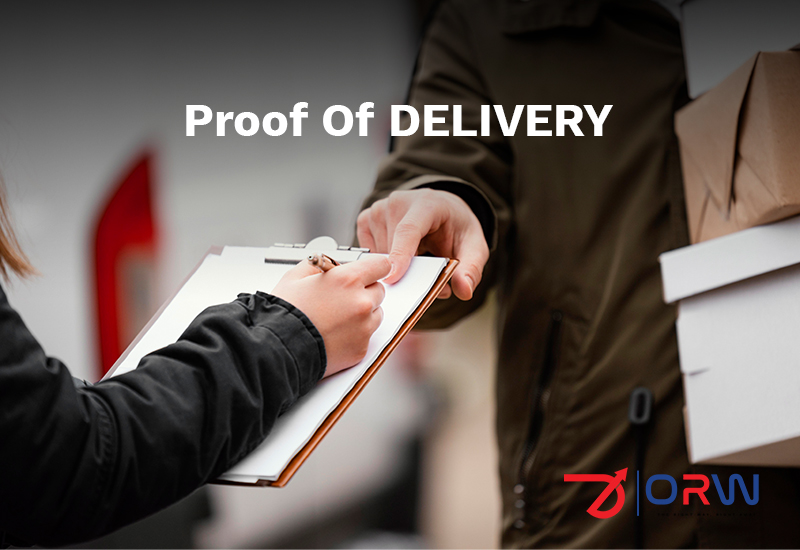
Let’s go back to square one: Proof of delivery, often shortened to POD, is basically just evidence that confirms your package reached the right person at the right place. You could think of this as the receipt for deliveries—just like you get when you purchase groceries, POD actually proves that goods changed hands.
This can be in different forms: a customer’s sign on paper, a photo showing the package at the doorstep of the customer, a digital confirmation on a smartphone. The key detail involves important information, including the name of the recipient, the date and time of delivery, notes about the location, and some form of acknowledgment that they have received the shipment.
What is proof of delivery used for? It serves three critical purposes: First, it confirms that the carrier completed their job. Second, it helps with the billing and payments. Third-and probably most important-it settles disputes when someone claims a delivery never took place.
Why POD Matters More Than Ever?
In traditional business, a handshake might have sealed the deal. Still, for modern logistics spanning several hundred kilometers across India, we require something more concrete.
Here’s the reality: delivery fraud and misplaced parcels are on the rise. Missing packages and customers claiming not to have received orders result in lost money and reputation for the business. A single disputed delivery may ruin years of a good relationship.
Proof of delivery in logistics serves as an insurance policy of sorts. Both sides of the transaction are protected. You can confidently bill for completed deliveries, without fear of chargebacks, for businesses. Customers, on the other hand, get accountability: someone cannot just drop your expensive electronics at the wrong address and disappear.
Beyond the prevention of disputes, POD is building something priceless: customer trust. When customers know that every delivery confirmation will be provided, they feel secure to order from you. That peace of mind turns one-time buyers into loyal partners.
Different Types of Proof of Delivery
Not all proof is created equal. Let’s look at the main types that are used within India’s logistics industry:
Paper POD is the traditional method – an actual document that the customer signs once goods are delivered. Then that signed paper will be submitted by the delivery personnel to the company. It’s simple and no technology is required, but papers can get lost, damaged, or even tampered with.
Electronics POD(ePOD) introduces us to the digital age. In this case, delivery personnel capture the customer’s signature on a smartphone or tablet, or they take a photo of the delivered package. This information is instantly uploaded into the company’s system. It’s faster, more secure, and creates automatic digital records.
Image-based POD, especially for contactless deliveries, has become popular. The delivery person simply photographs the package at your doorstep. This provides strong visual evidence—you can see just where and when the package was left.
OTP-Based POD adds an additional layer of security. The unique one-time password is sent to the customer via SMS or email. They will share this code only with the delivery person once they have received the package, thus confirming it in the system.
QR Code or Barcode POD uses scannable codes printed onto shipping labels that get scanned by the delivery person at the place of delivery. The moment it gets scanned, the delivery automatically gets recorded in the tracking system, complete with a timestamp and location.
How Proof of Delivery Tracking Actually Works?
Understanding the process helps you appreciate why proof of delivery in logistics is important and how it works:
Step 1: Dispatched Order – Once your shipment leaves the warehouse, it is assigned a unique tracking ID, basically its digital identity. This connects all the delivery information: customer address, phone number, and product details.
Step 2: In-transit updates: As the package travels, its whereabouts are tracked by GPS technology or barcode scans. Contemporary last-mile proof delivery service providers automatically share these updates with the company as well as the customer: “Out for delivery,” “In transit,” or “Delayed.”
Step 3: Delivery Confirmation – On arriving at the destination, the delivery person captures evidence. This can be in the form of a digital signature, photo, or OTP verification. It gets instantly uploaded onto the logistics system.
Step 4: Verification – this is when the logistics team cross-checks the POD details to ensure everything tallies up: right address, right customer, proper signatures, or photos. Once verified, the delivery is considered complete.
All parties involved have the convenience to view this process in real-time. No more calls to customer service saying “Where’s my package?” The tracking system shows exactly where it is and when it arrived.
Real Benefits of Modern POD Systems
Moving from paper receipts to electronic proof of delivery systems is not just about being high-tech; it solves very real problems:
Instant Visibility: The moment a delivery happens, everyone knows. Customers often receive notifications automatically, many of them with photos of their delivered package. No more uncertainty.
Reduced Disputes: With timestamped photos, GPS coordinates, and digital signatures, there is little room for “I never received it” arguments. The disputes will drop dramatically because the proof will be irrefutable.
Faster Payments: Businesses are now able to invoice right after their confirmed deliveries. No more waiting for paper documents to arrive at the office. This improves cash flow tremendously.
Better Planning: Digital POD systems generate data. You can see which routes take longer, which areas have more delivery issues, and where to improve. This helps optimize operations over time.
Environmental Benefits: Less use of paper means fewer trees being cut down and less physical storage. The transition from paper-based receipts to digital proof of delivery tracking is what fundamentally cuts down administrative time and boosts cash flow.
Confidence to Move On
In today’s logistics landscape, proof of delivery has transitioned from a mere formality to an essential aspect of all goods moved in a shipment. Proof of delivery protects the business from disputes over whether goods were delivered as specified, inspires trust in your customers, and enables transparent and accountable operations.
Today, the question isn’t whether you need proof of delivery-it’s whether you stay with old-school paper processes with no visibility and no accuracy or move to sophisticated digital solutions with real-time visibility and impeccable accuracy.
However, choosing a logistics partner with a strong emphasis on proof of delivery is more than just getting the shipment delivered-it is about building trust with each hand-off, minimizing loss, and offering seamless, reliable proof delivery service that actually works for your business rather than slows it down.