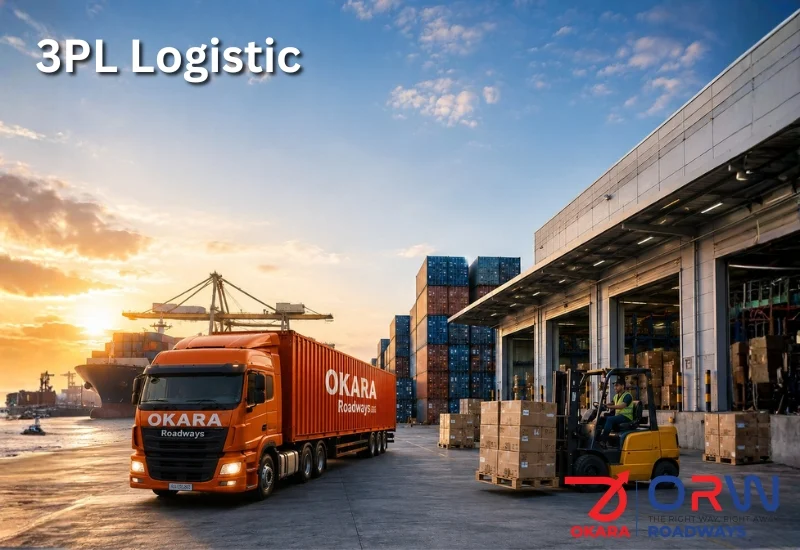
Business growth creates logistics problems. More orders. More inventory. More deliveries. More complexity. Managing this internally stretches resources thin.
Small businesses can’t afford massive logistics departments. Large businesses struggle coordinating complex supply chains. Medium businesses fall between—too big for simple solutions, too small for enterprise infrastructure.
3PL logistics services solve this challenge. Outsource the complexity. Focus on core business. Let specialists handle warehousing, transportation, and fulfillment.
Understanding what is 3pl logistics helps businesses make smarter operational decisions. When to outsource. What to keep in-house. How to scale efficiently.
What Is 3PL Logistics?
3PL stands for Third-Party Logistics. It’s outsourcing logistics functions to specialized providers instead of handling everything internally.
Think about parties in logistics. First party (1PL) is your company managing everything. Second party (2PL) is asset-based carriers providing transport only. Third party (3PL) is comprehensive logistics partners managing multiple functions—warehousing, inventory, transport, distribution.
The “third party” terminology comes from contractual relationships. Your company is first party. Your customer is second party. The logistics provider is third party.
3PL logistics providers offer end-to-end solutions. Not just moving boxes. Complete supply chain management. From receiving inventory to final delivery. Everything between handled professionally.
This differs from hiring individual service providers. One company for warehousing. Another for transport. Another for delivery. 3PL integrates all functions. One partner. One contract. One accountability point.
Modern what is 3pl logistics includes technology integration. Inventory management systems. Order tracking. Analytics dashboards. Real-time visibility. Technology most businesses can’t build themselves.
The core value proposition? Focus on making and selling products. Let logistics experts handle getting products to customers efficiently.
Key Services Offered by 3PL Logistics Providers
What exactly do 3PL logistics services include?
Warehousing – Storage facilities. Climate-controlled environments. Security systems. Inventory organization. Businesses get storage capacity without owning warehouses.
Inventory Management – Stock tracking. Reorder point monitoring. Real-time stock visibility. Preventing stockouts and overstock simultaneously.
Order Fulfillment – Picking products from shelves. Packing according to requirements. Labeling. Documentation. Entire process from order receipt to shipping.
Transportation – Moving goods between locations. Network of carriers. Route optimization. Load planning. Multiple transport modes.
Distribution – Getting products to multiple destinations efficiently. Hub-and-spoke models. Cross-docking. Regional distribution networks.
Reverse Logistics – Returns management. Product recalls. Repair and refurbishment. The backward flow often overlooked but critically important.
Value-Added Services – Kitting and assembly. Packaging customization. Quality inspection. Labeling and tagging. Services beyond basic storage and transport.
Technology Systems – WMS, TMS, OMS systems. Integration with client systems.
Comprehensive 3PL providers handle all these functions. Specialized 3PLs focus on subsets. Choose based on actual needs.
Transportation in 3PL
Transportation is core to 3PL operations. Moving goods efficiently between points.
Multiple Modes – Road transport dominates in India. But 3PLs coordinate rail, air, and ocean freight too. Multi-modal solutions for different requirements.
Full Truck Load Services – Dedicated trucks for large shipments. Direct delivery. Faster transit. Full truckload services in India are essential for bulk movements between cities.
Less Than Truckload – Consolidating smaller shipments. Sharing transport costs. Economical for partial loads.
Last-Mile Delivery – Final leg to customer doorstep. Most complex and expensive part. Critical for e-commerce. 3PLs manage this challenging final step.
Network Coverage – Reaching tier-2 and tier-3 cities. Remote locations. Areas where individual businesses struggle. 3PLs have established networks.
Route Optimization – Software determining most efficient paths. Fuel savings. Time reduction. Cost control through intelligent planning.
Real-Time Tracking – GPS monitoring. Shipment visibility. Estimated arrival times. Transparency throughout transit.
Transportation excellence separates good 3PLs from mediocre ones. Network reach. Reliability. Technology. All matter.
Benefits of 3PL Logistics Services
Why do businesses outsource logistics instead of handling internally?
Cost Reduction – Eliminate fixed costs of warehouses, trucks, staff. Convert to variable costs. Pay only for capacity used. Economies of scale.
Scalability – Grow without infrastructure investment. Seasonal spikes handled easily. Scale down during slow periods. Flexibility impossible with owned assets.
Focus on Core Business – Leadership attention on product development, sales, marketing. Not logistics coordination. Strategic focus instead of operational distraction.
Expertise Access – Professional logistics knowledge. Years of experience. Best practices. Avoid learning curves and mistakes.
Technology Investment – Modern systems available. WMS, TMS, analytics platforms. Tools small businesses couldn’t afford independently.
Speed to Market – Launch products faster. Enter markets quickly. Established infrastructure ready immediately.
Risk Mitigation – Distribute risk. Multiple carriers. Alternative routes. Backup facilities. 3PLs handle disruptions.
Geographic Expansion – Reach new regions without local presence. 3PL networks span the country. Instant access to markets.
Improved Service Levels – Faster deliveries. Better accuracy. Professional handling. Customer satisfaction improves.
Data and Insights – Analytics showing logistics performance. Identify bottlenecks. Optimization opportunities.
For growing businesses, 3PL benefits often outweigh in-house logistics advantages.
3PL Logistics in India
The Indian 3PL market is growing rapidly. Several factors drive this.
E-commerce Boom – Online shopping explodes. Fulfillment complexity increases. Retailers need professional logistics. 3PL providers fill this gap.
GST Implementation – Goods and Services Tax simplified state-to-state movement. Reduced checkpoints. Made national distribution viable. 3PL networks expanded accordingly.
Infrastructure Improvement – Better highways. Modern warehouses. Improved ports. Logistics becomes more efficient.
Manufacturing Growth – Make in India initiatives. Manufacturing expansion. Production requires logistics. 3pl logistics india sector grows supporting manufacturing.
Technology Adoption – Digital transformation. Cloud systems. Mobile applications. Technology enables better 3PL services.
Competitive Pressure – Businesses need logistics efficiency to compete. Professional 3PL services provide competitive advantage.
Leading logistic services provider in india operations cover entire country. Network of warehouses. Fleet of vehicles. Technology platforms. Comprehensive services matching international standards.
How to Choose the Right 3PL Partner?
Selecting wrong 3PL partner creates problems. Selecting right partner drives growth.
Assess Your Needs – Define requirements clearly. Warehousing locations. Transport modes. Volume projections. Special handling needs. Define needs first.
Evaluate Experience – Industry-specific experience matters. Handling similar products. Serving similar business models. Track record matters.
Check Infrastructure – Visit warehouses. See facilities. Check cleanliness, organization, security. Modern infrastructure indicates professionalism.
Technology Capabilities – What systems do they use? Integration options. Reporting capabilities. Real-time visibility. Technology determines service quality.
Network Coverage – Can they reach your destinations? Tier-1 cities are easy. Tier-2 and tier-3 coverage matters more.
Service Level Agreements – What do they guarantee? Delivery times. Accuracy rates. Damage rates. Clear SLAs prevent disputes.
Scalability – Can they grow with you? Handle volume increases? Seasonal peaks? Choose partners able to scale.
Financial Stability – Are they financially sound? Logistics providers going bankrupt creates disasters.
References – Talk to existing clients. Real experiences. Not marketing promises.
Pricing Structure – Transparent pricing. Clear billing. Competitive rates. But cheapest isn’t always best. Value matters more.
Conclusion
3PL logistics services aren’t right for every business. Very small operations might handle logistics themselves. Extremely large corporations might justify in-house infrastructure. But the vast middle? 3PL makes sense.
Understanding what is 3pl logistics clarifies when outsourcing beats internal management. Cost efficiency. Scalability. Expertise. Technology. Focus. Benefits stack up.
The 3pl logistics india market continues maturing. More options. Better services. Improved technology. Businesses benefit from increasing competition and capability.
Choosing the right logistic services provider in india requires careful evaluation. Network coverage. Service quality. Technology. Experience. All factors matter.
Transportation remains core to logistics success. Whether full truckload services in India for large shipments or LTL for smaller loads, reliable transport determines customer satisfaction.
At Okara Roadways, while we focus on transportation services across India’s 36 states and union territories with our 75,000+ vehicle fleet, we understand the broader logistics ecosystem. Our nationwide transport network serves as the foundation many businesses and 3PL providers build upon.
Effective logistics—whether in-house, outsourced, or hybrid—drives business success. Products reaching customers on time. Costs controlled. Operations scalable.
Choose logistics strategies matching your business needs. Evaluate options objectively. Make decisions based on data and requirements.
Who should use 3PL logistics services?
3PL services are ideal for small, medium, and growing businesses that want to outsource logistics operations, reduce costs, and focus on core activities like sales and product development.
Are 3PL logistics services cost-effective for small businesses?
Yes, 3PL services help small businesses avoid heavy investments in warehouses, vehicles, and staff. They convert fixed logistics costs into variable costs, making operations more affordable and scalable.
Can 3PL providers handle both transportation and warehousing?
Yes, most 3PL logistics providers offer integrated solutions that include warehousing, inventory management, transportation, and last-mile delivery under one system.
How do I choose the right 3PL logistics provider in India?
Look for factors like network coverage, technology capabilities, industry experience, service reliability, pricing transparency, and the ability to scale with your business needs.